The Weeknight Siren Song
There’s a specific kind of magic that happens when you open the oven door. It’s not just heat; it’s a fragrant cloud of promise. The other night, the rain was hammering the windows and my energy levels were hovering somewhere near “can’t even.” I craved something that tasted like sunshine and felt like a warm hug, but I didn’t have the patience for a culinary project. That’s when the siren song of the salmon fillet began to sing.
I’m talking about that moment when the garlic hits the hot pan and sizzles into a golden perfume, mingling with the sharp, bright zing of lemon. You lay the glistening salmon next to the perky green asparagus spears, and the whole tray looks like a still life painting. This isn’t just dinner; it’s a 25-minute rescue mission from the mundane. It’s the dish that makes you feel like a kitchen wizard with almost zero effort, and the result is so flaky, so tender, and so bursting with flavor that you’ll forget all about the rain outside.
Recommended Product
 -11%
-11%
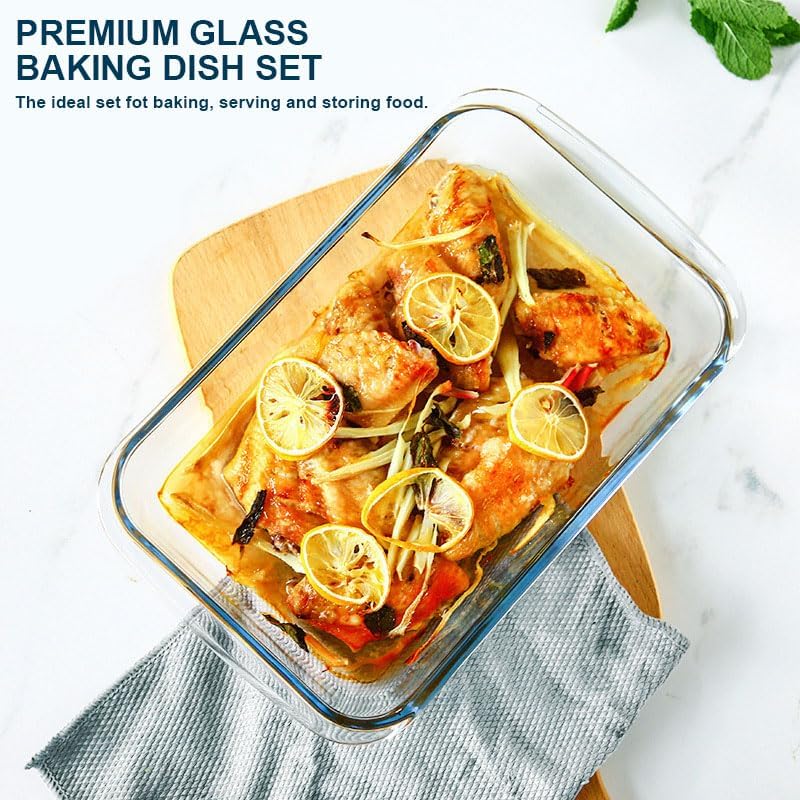
8‑Piece Deep Glass Baking Dish Set with Plastic Lids (Rectangular Bakeware)
- Material: Oven, freezer & microwave safe borosilicate glass (goes from fridge/oven without cracking)
- Pieces →: 4 rectangular dishes + 4 tight‑fitting plastic lids (stackable)
- Easy Care →: Dishwasher safe glass & lids

Why This One-Pan Wonder is Your New Best Friend
Let’s be real. Most weeknights, the thought of creating a meal that involves multiple pots, pans, and a sink full of suds is enough to make you order takeout for the third time this week. This recipe is the delicious antidote to that feeling. It’s the ultimate low-effort, high-reward situation. You get a restaurant-quality meal with what feels like cheat codes activated.
🍳 Used in this recipe
Get It on Amazon Basics✔ Free Delivery | ✔ Top Rated | ✔ Budget-FriendlyThe beauty lies in its elegant simplicity. The lemon garlic butter sauce (we’ll get to that glorious concoction in a second) does double duty. It acts as a basting liquid for the salmon, keeping it unbelievably moist, while simultaneously roasting the asparagus in its flavorful drippings. Every spear of asparagus becomes a vehicle for that buttery, garlicky goodness. And the cleanup? A single sheet pan. That’s it. You can literally toss the parchment paper and be done. It’s the kind of meal that makes you feel put-together and nourished, even when your actual life might be a bit of a chaotic mess. For more inspiration on simple, elegant dinners, you can always find me pinning my favorites over on Pinterest.
The Secret to Silky, Flaky Salmon (It’s All in the Fish)
Ever had salmon that was dry, chalky, or had that weird white stuff oozing out on top? (Cue the shudder). That white stuff is called albumin, and it’s just a harmless protein that coagulates under heat. But seeing it is a sign that the fish has been cooked a little too aggressively. The secret to avoiding this, and achieving that perfect, melt-in-your-mouth texture, lies in two things: temperature and moisture.
First, the temperature. The single biggest mistake people make is overcooking. Salmon continues to cook for a few minutes after you pull it from the oven (it’s the culinary equivalent of a “carryover” in a race). The goal is to pull it when the center is still just a tiny bit translucent. It’ll finish cooking on the hot pan, reaching that perfect sweet spot of 125-130°F in the center. This is the difference between fish that’s flaky and moist, and fish that’s dry as a bone.
🍳 Used in this recipe
Get It on Amazon Basics✔ Free Delivery | ✔ Top Rated | ✔ Budget-FriendlySecond, the fat and the shield. Our buttery sauce here is key. Fat is a flavor carrier, but it’s also a temperature regulator, ensuring the fish cooks gently. The lemon slices you lay on top aren’t just for show; they create a little steamy tent over the flesh, protecting it from the harsh, direct heat of the oven. It’s a gentle braise and a roast all in one. When you respect the salmon, it rewards you with a texture that’s firm but tender, and a flavor that’s rich and clean. To see just how beautiful this dish can be, check out this stunning visual guide for Easy Baked Lemon Garlic Salmon with Asparagus.
How to Make It: The Step-by-Step
Ready to get this masterpiece into your oven? It’s so simple, you could almost do it with your eyes closed (though I wouldn’t recommend that, as garlic can be tricky). First, preheat that oven to a sizzling 400°F (200°C). While it’s heating up, grab a large rimmed baking sheet and line it with parchment paper for that glorious easy cleanup.
Now, for the asparagus. Wash it, and give those woody ends a good snap. The best way to do this is to hold a spear in the middle and near the bottom and just bend; it will naturally break where the tough part ends. Lay the spears out on one side of your baking sheet.
🍳 Used in this recipe
Get It on Amazon Basics✔ Free Delivery | ✔ Top Rated | ✔ Budget-FriendlyNext, let’s make the magic sauce. In a small bowl, whisk together melted butter, a generous amount of minced garlic, some lemon juice, a splash of olive oil, and a pinch of salt and pepper. Don’t be shy with the garlic. Pour this liquid sunshine all over the asparagus and the empty space on the pan. Now, place your salmon fillets (skin-side down if they have skin) on the saucy part of the pan.
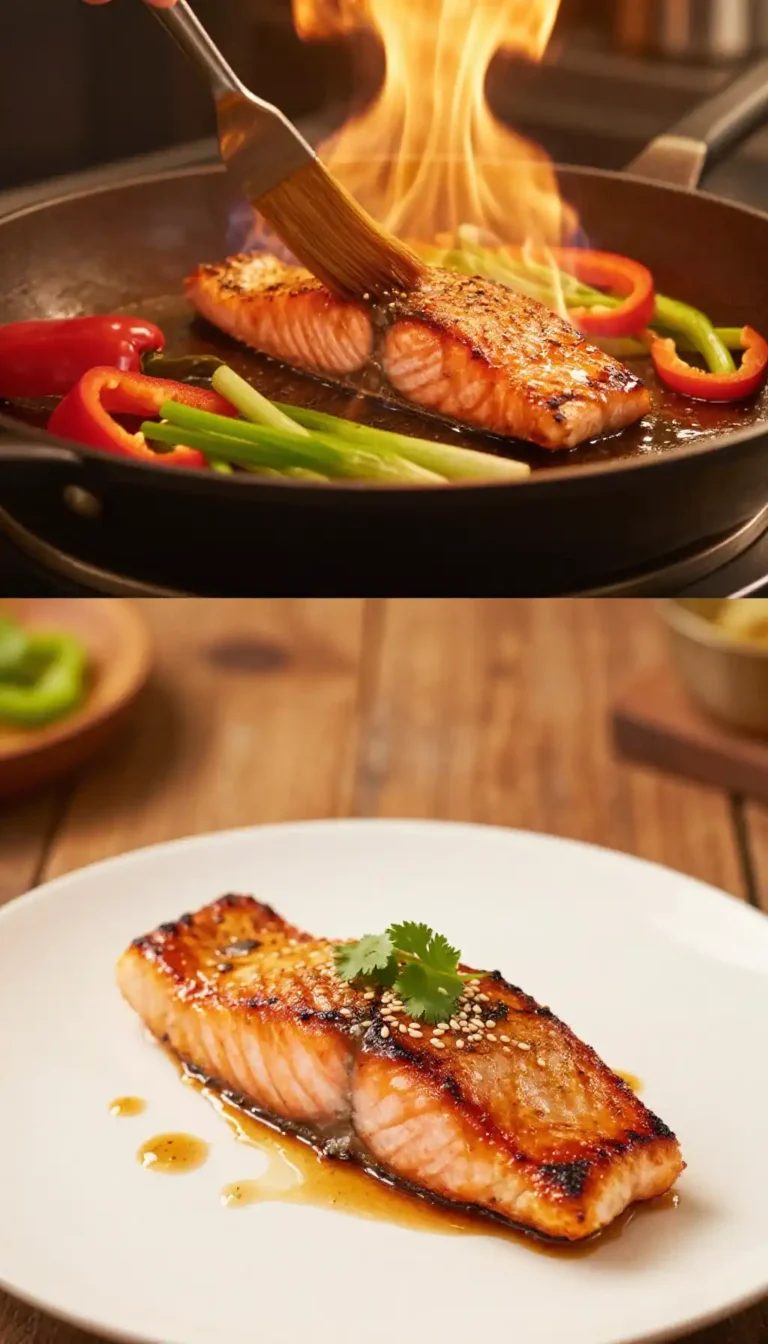
Use a pastry brush (or just the back of a spoon) to slather that glorious garlic butter mixture all over the tops of the salmon fillets. Season the fish with a little more salt and pepper. Finally, top each fillet with a few thin slices of fresh lemon. These will caramelize slightly in the oven and perfume the entire dish. Slide the pan into the oven and bake for about 12-15 minutes. You’re looking for the salmon to be just cooked through and flake easily with a fork, and the asparagus to be tender-crisp. If you want a little color, you can pop it under the broiler for the last minute or two—just watch it like a hawk!

Avoiding the Dinner Disaster Zone
Even the easiest recipes have their pitfalls. Let’s navigate the potential pitfalls so your dinner is flawless.
🍳 Used in this recipe
Get It on Amazon Basics✔ Free Delivery | ✔ Top Rated | ✔ Budget-FriendlyThe number one crime against salmon is **Overcooking**. I mentioned it before, but it bears repeating because it’s the heartbreak of a good fillet. Set your timer for the lower end of the recommended time. You can always cook it more, but you can’t un-cook it. Remember, it should still be a little soft in the very middle when you take it out.
The second pitfall is **Uneven Asparagus**. You know when some spears are mushy and others are still tough? That’s usually because they were too crowded on the pan. Give them some breathing room! If your asparagus is a thick as a thumb, it might need a 5-minute head start in the oven before the salmon joins the party. If it’s pencil-thin, it might need less time.
The third is **Blandness**. Don’t be timid with the seasoning. Salt is not the enemy; it’s the amplifier. Taste your butter mixture before you pour it on. Does it make you want to lick the spoon? If not, add more garlic, more lemon, more pepper. This isn’t the time for subtlety.
🍳 Used in this recipe
Get It on Amazon Basics✔ Free Delivery | ✔ Top Rated | ✔ Budget-FriendlySetting the Scene: Dinner Vibes
This dish is a chameleon. It can be the star of a lazy Tuesday night on the couch with your favorite sweatpants, or it can be the anchor of a beautiful, elegant dinner party. The aroma alone—garlic, butter, lemon, roasting fish—screams “I am a sophisticated adult who has my life together.”
Recommended Product
 -40%
-40%
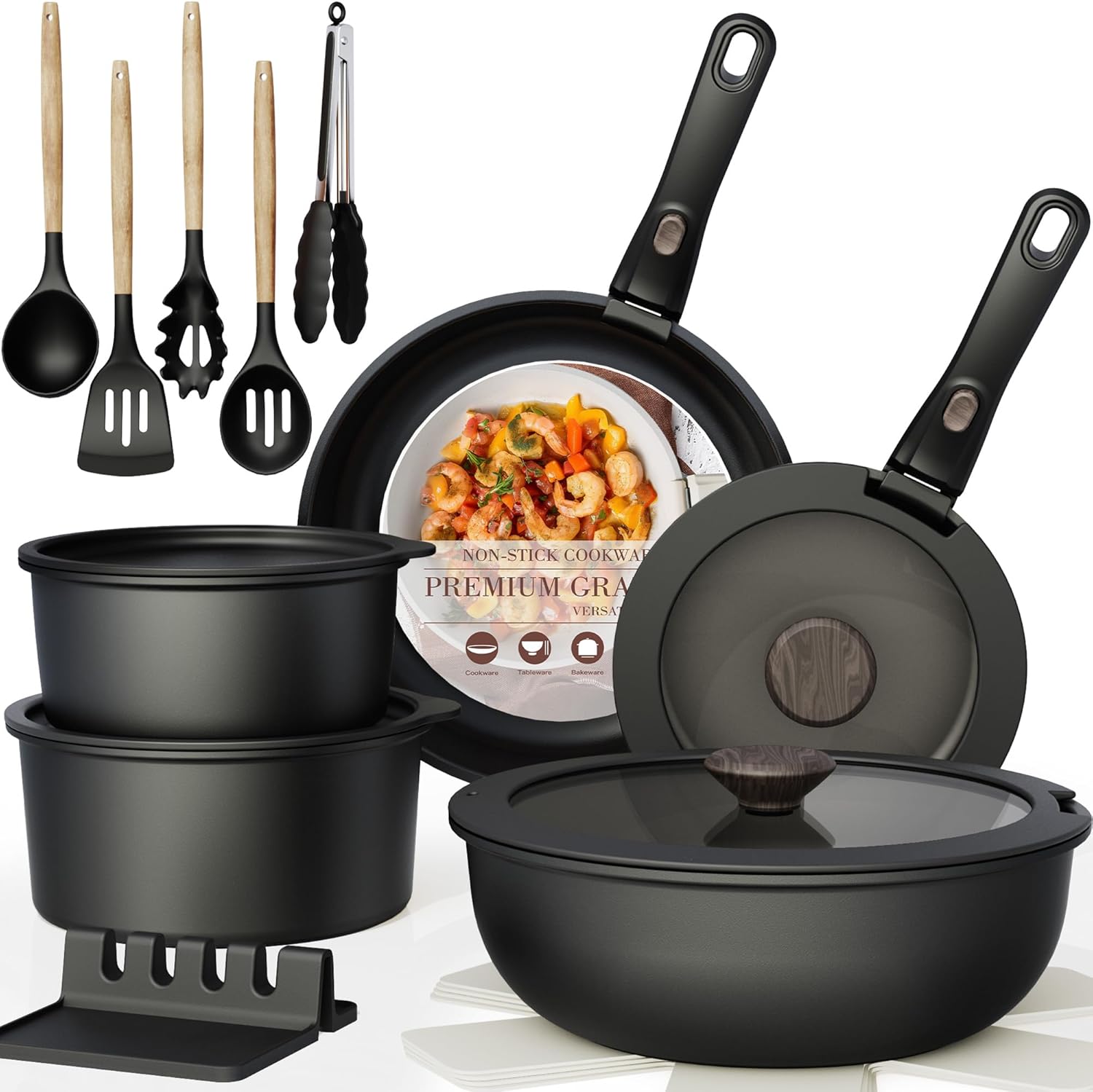
Astercook 21‑Piece Non‑Stick Cookware Set with Detachable/Removable Handles
- Pieces Included →: 21‑piece set with multiple pots, pans, and accessories
- Non‑Stick Coating →: Premium ceramic non‑stick free of harmful PFOA chemicals for healthier cooking
- Cleanup →: Easy to clean thanks to non‑stick surface and detachable handles
- Compatibility →: Works on induction, gas, electric, and ceramic stovetops; oven safe with handles removed
On a rainy night, this is pure comfort. The bright lemon cuts through the gloom, and the warm, savory flavors feel like a protective blanket. For a special occasion, serve this on a large platter, garnished with fresh parsley and extra lemon wedges. It looks stunning, vibrant, and incredibly inviting. It pairs beautifully with a simple quinoa, a crusty loaf of bread to mop up the juices, or a crisp white wine (or, if you’re sticking to our kitchen rules, a sparkling water with a lemon twist). It’s a meal that invites conversation and lingering at the table.
Questions You’re Probably Asking
How to freeze Easy Baked Lemon Garlic Salmon with Asparagus?
This is a meal-prepper’s dream. While the asparagus is always best fresh (it can get a bit weepy upon thawing), the salmon freezes beautifully. Let the cooked salmon cool completely. Wrap each fillet individually in plastic wrap, then place them in a freezer-safe bag or airtight container. It will keep for up to 2 months. To reheat, thaw it overnight in the fridge and then gently warm it in the oven or a low-temperature skillet to preserve its moisture. Microwaving is a last resort and can make it rubbery.
🍳 Used in this recipe
Get It on Amazon Basics✔ Free Delivery | ✔ Top Rated | ✔ Budget-FriendlyWhat are the calories in Easy Baked Lemon Garlic Salmon with Asparagus?
This is a wonderfully healthy meal. A typical serving (one 6oz salmon fillet and a generous portion of asparagus with the sauce) comes in at around 450-500 calories. It’s packed with lean protein, healthy omega-3 fatty acids, and vitamins from the asparagus and lemon. It’s nutrient-dense and satisfying, so you won’t be hungry an hour later.
Can I use frozen salmon fillets?
Absolutely. The key is to thaw them properly first. The best way is to move them from the freezer to the fridge the night before you plan to cook. If you’re in a pinch, you can place the sealed fillets in a bowl of cold water for about 30 minutes. Never thaw fish at room temperature or in the microwave. Pat the thawed fillets very dry with a paper towel before seasoning to ensure the sauce sticks and the fish roasts instead of steams.
What other vegetables can I use besides asparagus?
Get creative! This recipe is a fantastic template. Broccoli florets, sliced bell peppers, zucchini coins, or even cherry tomatoes work wonderfully. Just keep in mind the cooking time. Harder vegetables like broccoli might need a bit more time, while softer ones like zucchini and tomatoes will cook faster and release more water, potentially making your pan a bit soupy. Adjust as needed!
🍳 Used in this recipe
Get It on Amazon Basics✔ Free Delivery | ✔ Top Rated | ✔ Budget-FriendlyRecommended Product
 -33%
-33%
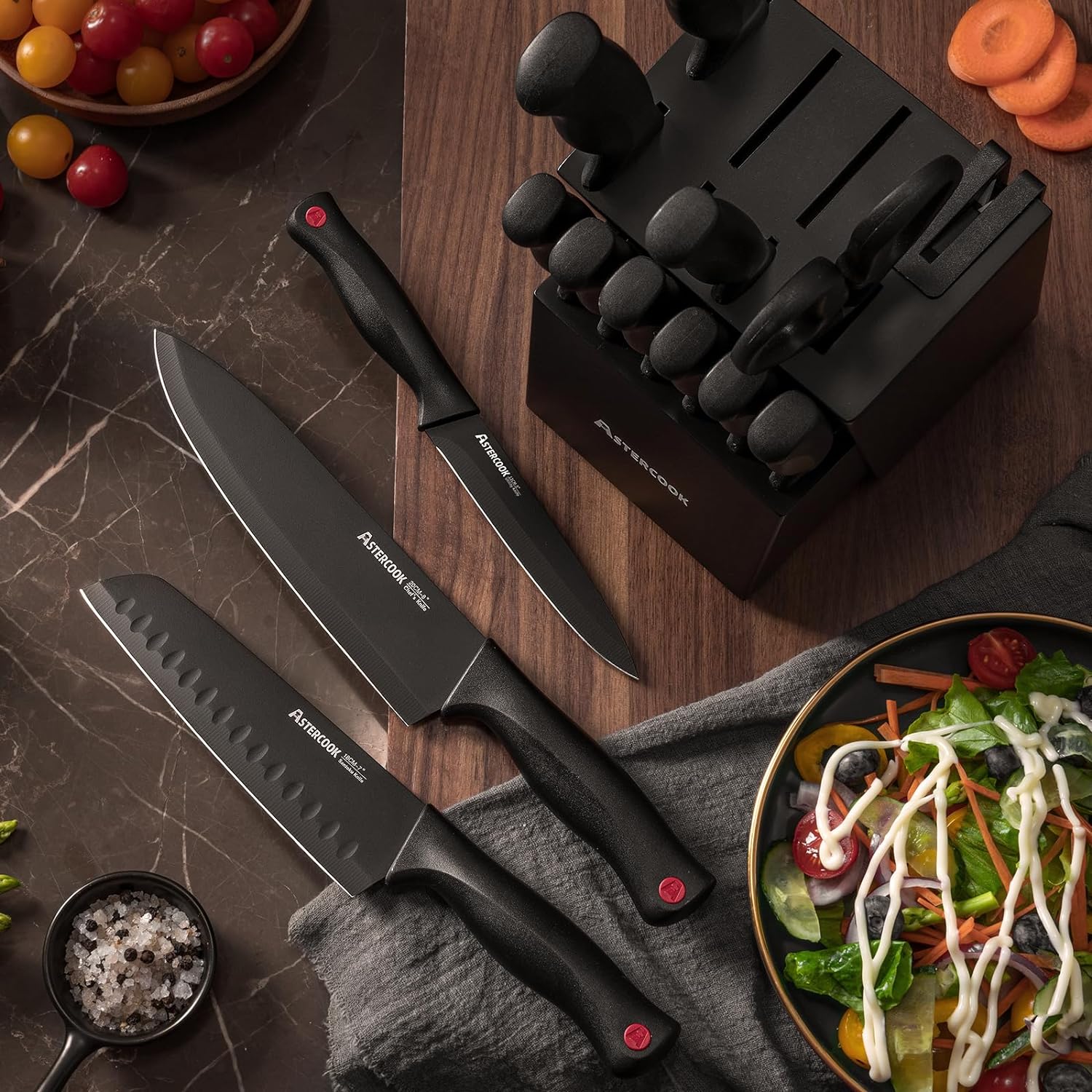
Astercook 15‑Piece Kitchen Knife Set with Built‑In Sharpener Block
- Built‑In Sharpener →: Integrated sharpener in block for easy maintenance
- Material →: High‑carbon German stainless steel blades (rust‑resistant, durable)
- Dishwasher Safe →: Yes (but hand washing recommended to preserve sharpness)
My garlic always burns. What am I doing wrong?
Ah, the scourge of roasted garlic lovers. Burnt garlic is bitter and unpleasant. The problem is that minced garlic has a very high surface area and can scorch quickly in a hot oven. Our recipe uses melted butter, which helps shield it, but if you’re worried, try this trick: use garlic powder in the sauce instead of fresh minced garlic, and then sprinkle fresh minced garlic on top for the last 5 minutes of cooking. Alternatively, you can roast whole, unpeeled garlic cloves with the asparagus and squeeze the soft, sweet paste out later.

Easy Baked Lemon Garlic Salmon with Asparagus

Ingredients
Ingredients
- 1.5 lb salmon fillet skin-on or skinless, cut into 4 portions
- 1 bunch asparagus woody ends trimmed
- 3 tbsp olive oil divided
- 4 tbsp unsalted butter melted
- 4 cloves garlic minced
- 1 large lemon half juiced, half sliced
- 1 tsp dried oregano
- 0.5 tsp salt
- 0.25 tsp black pepper
- 2 tbsp fresh parsley chopped, for garnish