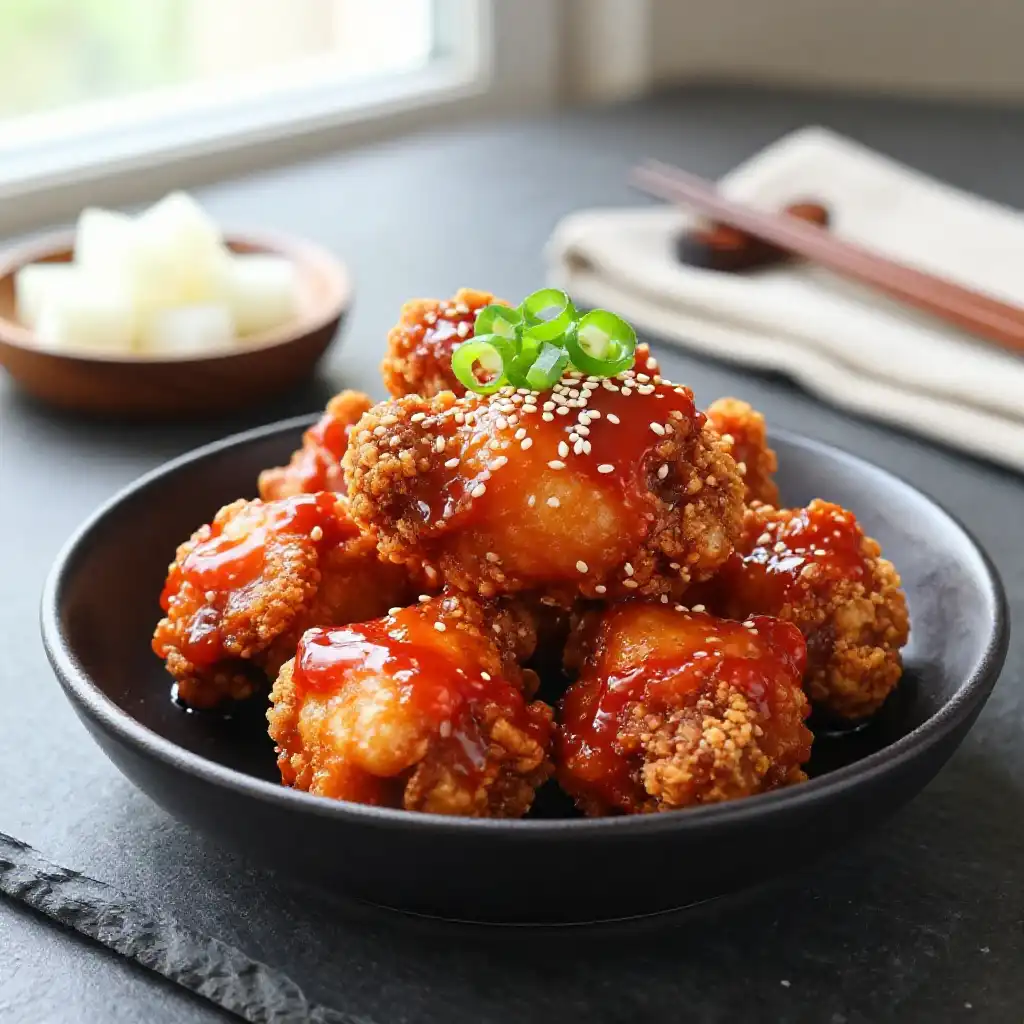
Let’s talk about a sound. Not just any sound, but the high-definition, bone-rattling *shatter* of a crust so crisp it makes your teeth vibrate. If you’ve ever walked down a neon-lit street in Seoul, you know that smell—the intoxicating perfume of ginger, garlic, and bubbling hot oil that practically pulls you by the nose into a tiny, steam-filled shop.
That is the magic of Korean Fried Chicken with Gochujang Glaze. It isn’t just “fried chicken.” It is a feat of engineering. It’s the kind of meal that makes you forget your own name for a second while you lick sticky, spicy, crimson sauce off your fingertips. But here is the real kicker: most fried chicken goes soggy the second sauce touches it. Not this one. This chicken stays crunchy enough to be heard in the next room, even under a heavy blanket of glaze.
The Secret Science of the Double-Fry
Why is this chicken different from the stuff you get at the local drive-thru? It all comes down to the “Double-Fry Method.”
Think of the first fry as the “cooking phase.” We’re just making sure the chicken is juicy and safe to eat. But that second fry? That’s where the alchemy happens. We blast the chicken again in high-heat oil to render out every last drop of moisture from the skin.
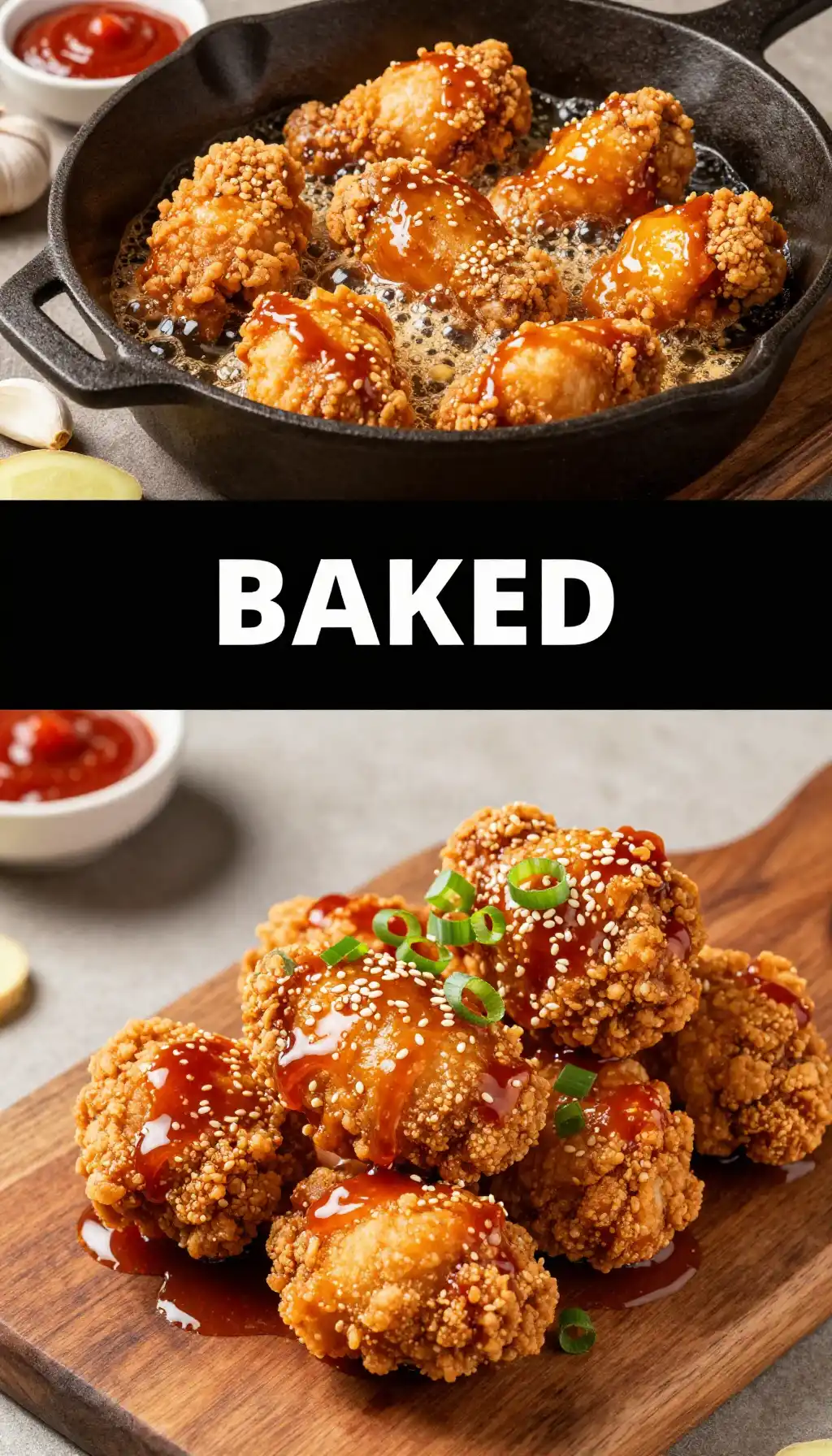
This creates a paper-thin, glass-like crust that acts as an impenetrable fortress. Even when we douse it in our spicy gochujang glaze, the crunch remains intact. We also swap out heavy flour for potato starch or cornstarch. This is vital. Starch creates a lighter, airier crispness compared to the dense, bread-like coating of Western fried chicken. It’s the difference between wearing a heavy winter coat and a sleek, waterproof windbreaker.
What You Need to Raid From the Pantry
Before you heat up that oil, let’s make sure your arsenal is stocked. You don’t need a million ingredients, but you do need the *right* ones.
The Protein: Use boneless thighs for the juiciest results, or wings if you like the “traditional” experience.
The Starch: Potato starch is the gold standard here. It gives that signature “shatter” when you bite in.
The Gochujang: This is the heart of the dish. It’s a fermented chili paste that is sweet, savory, and spicy all at once. It has a depth that regular hot sauce just can’t touch.
The Aromatics: Fresh ginger and garlic are non-negotiable. They cut through the richness of the fry and make the whole dish pop.
The Sweetener: Honey or corn syrup gives that glossy, “Instagram-ready” shine and balances the heat of the peppers.
Mastering the Ultimate Crunch
Ready to get your hands dirty? Here is **how to make Korean Fried Chicken with Gochujang Glaze** like a pro.
Step 1: The Prep and Dusting
Pat your chicken bone-dry. Moisture is the enemy of crunch! Toss the pieces in a mix of salt, pepper, and ginger. Then, dredge them in your starch. You want a thin, even coating—not a thick paste.
Step 2: The First Dive
Heat your oil to 330°F (165°C). Fry the chicken in batches for about 7-8 minutes. They will look pale and sad at this point. Don’t worry. Set them aside on a wire rack to breathe for a few minutes. This “rest” lets the internal moisture migrate to the surface, ready to be vaporized in the next step.
Step 3: The Second Blast
Crank that heat up to 375°F (190°C). Drop the chicken back in for 2-3 minutes. Watch as they turn a glorious, deep golden brown. At this point, they should sound like tapping on a hollow piece of wood.
Step 4: The Glaze Dance
In a separate pan, simmer your gochujang, soy sauce, minced garlic, ginger, and honey until it’s thick and syrupy. While it’s bubbling, toss in your hot chicken. Coat every nook and cranny.
How NOT to Ruin Your Dinner
I’ve seen good people make bad chicken, and it’s usually because of these three cardinal sins:
Crowding the Pan: If you drop twenty pieces of cold chicken into hot oil at once, the temperature crashes. Instead of frying, your chicken will boil in oil. It becomes greasy, soggy, and depressing. Fry in batches!
Skipping the Rest: You might be tempted to just fry it once for a long time. Don’t. That rest between fries is what separates the legends from the amateurs.
Using Old Spices: If your gochujang has been sitting in the back of the fridge since the mid-2000s, throw it out. You want that bright, fermented funk to be fresh.
Looking for something to wash all that spice down? Check out these refreshing drink pairings to cool off your palate after a spicy wing marathon.
Setting the Scene: Serving Vibes
This isn’t a “sit-at-the-dining-table-with-fine-china” kind of meal. This is a “spread-newspaper-on-the-coffee-table” dish.
It’s perfect for a Friday night movie marathon or a high-stakes game night with friends. Serve it with a side of pickled radish (danmuji) to provide a cold, acidic crunch that cuts through the heat. If you’re feeling fancy, you can find more inspiration for side dishes over at our full recipe archives.
Scatter some sesame seeds and chopped scallions over the top. It makes you look like a culinary genius, and the tiny pop of sesame adds another layer of texture.
Everything You’re Dying to Ask
How to freeze Korean Fried Chicken with Gochujang Glaze?
If you want to meal prep, fry the chicken only *once*. Let them cool completely, then freeze them in a single layer. When the craving hits, do the “second fry” straight from the freezer (adding a minute or two) and then toss them in fresh glaze. Never freeze the chicken once it has been sauced, or you’ll wake up to a soggy mess.
Calories in Korean Fried Chicken with Gochujang Glaze?
Let’s be real: this is a treat. A typical serving (about 3-4 pieces) ranges from 450 to 600 calories, depending on the sugar content of your glaze and if you used thighs or wings. But hey, the joy it brings? Zero calories.
Can I use an Air Fryer?
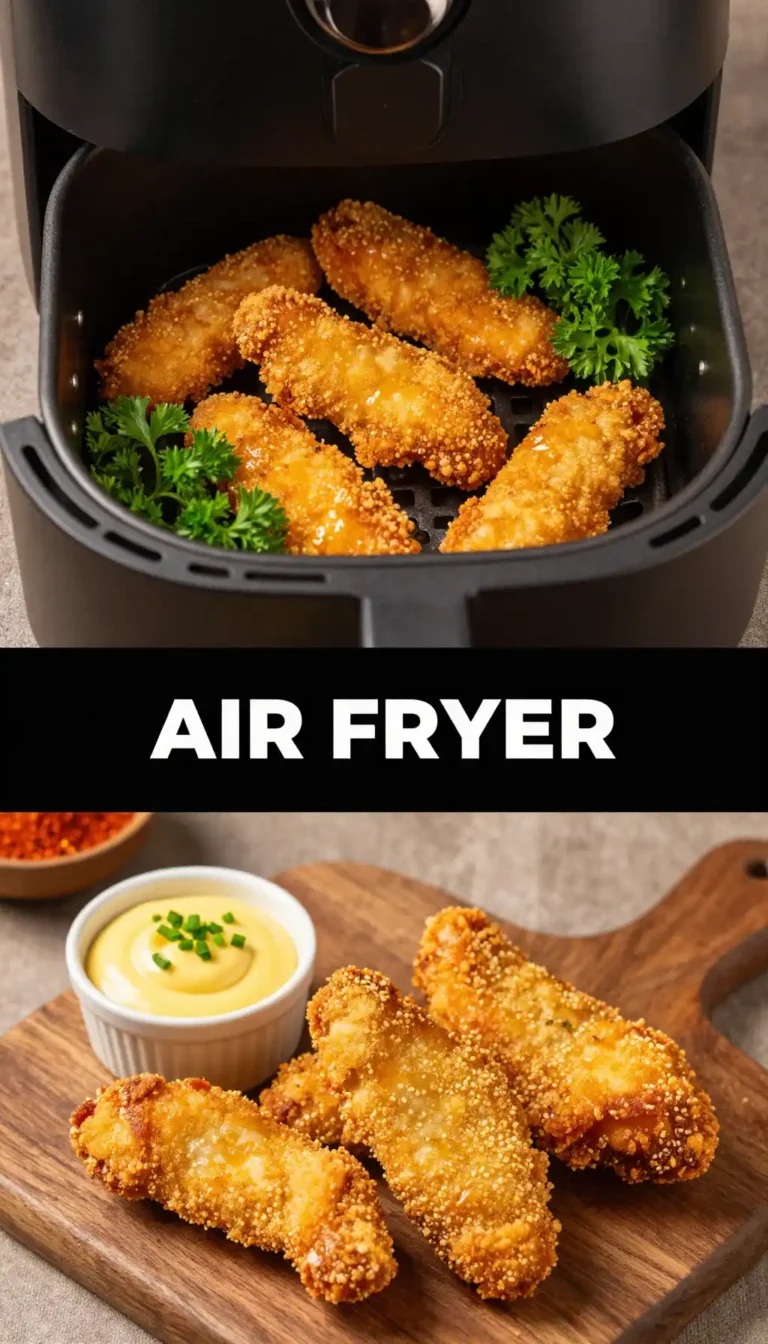
You can! It won’t be *exactly* the same as the double-oil fry, but it’s an easy Korean Fried Chicken with Gochujang Glaze alternative. Spritz the starched chicken heavily with oil and air fry at 400°F, shaking the basket frequently until they are lethal-weapon levels of crunchy.
Is it too spicy for kids?
Gochujang has a kick, but it’s more of a “warm hug” than a “slap in the face.” If you’re worried, just increase the honey or add a splash of apple juice to the sauce to mellow it out.
The Final Word
There is something deeply satisfying about making **Korean Fried Chicken with Gochujang Glaze** at home. It’s a labor of love that rewards you with sounds and flavors you just can’t get anywhere else.
So, grab your starch, heat up that oil, and get ready to experience the most addictive crunch of your life. Just make sure you have plenty of napkins—you’re going to need them.
Happy frying!
Korean Fried Chicken with Gochujang Glaze

Ingredients
Ingredients
- 2 lb chicken wings separated into flats and drums, patted dry
- 0.5 cup potato starch or cornstarch for extra crunch
- 0.25 cup all-purpose flour
- 1 tsp baking powder
- 3 tbsp gochujang Korean red chili paste
- 2 tbsp soy sauce
- 2 tbsp honey
- 1 tbsp rice vinegar
- 1 tbsp fresh ginger finely grated
- 2 cloves garlic minced
- 1 tsp toasted sesame oil
- 1 quart vegetable oil for frying