Picture this: It’s a golden Saturday afternoon. The air is warm, the sun is dipping low, and there’s a distinct, rhythmic tiss-tiss-tiss sound coming from the backyard. That, my friends, is the sound of high-quality fat hitting hot grates.
I’m talking about salmon. But not just any salmon. We aren’t doing those thin, wimpy fillets that curl up the second they see a flame. No, today we are going thick. We are going meaty. We are going with Grilled Salmon Steaks with Lemon Dill Butter.
Recommended Product
 -40%
-40%
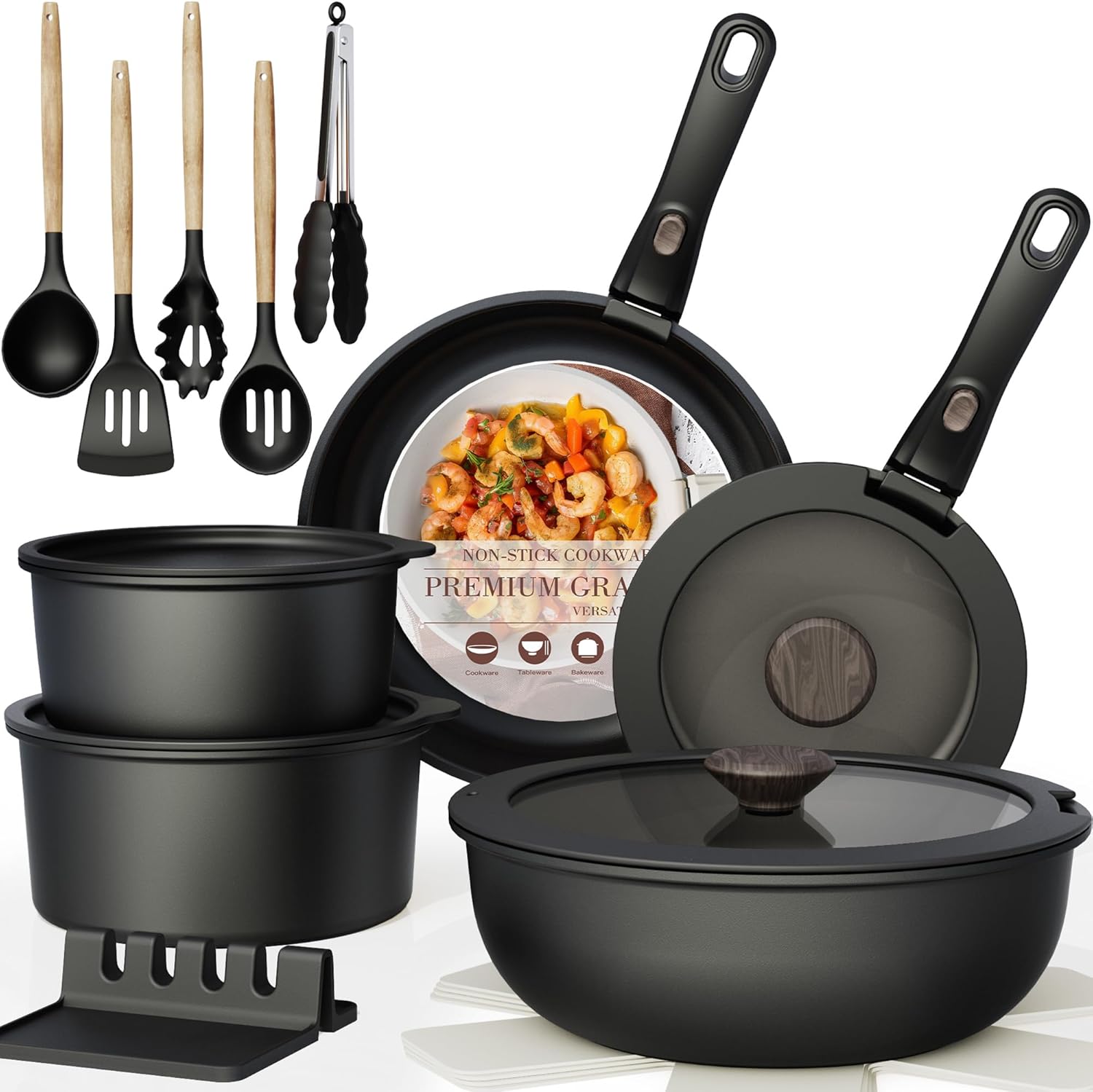
Astercook 21‑Piece Non‑Stick Cookware Set with Detachable/Removable Handles
- Pieces Included →: 21‑piece set with multiple pots, pans, and accessories
- Non‑Stick Coating →: Premium ceramic non‑stick free of harmful PFOA chemicals for healthier cooking
- Cleanup →: Easy to clean thanks to non‑stick surface and detachable handles
- Compatibility →: Works on induction, gas, electric, and ceramic stovetops; oven safe with handles removed
When that cold, herb-flecked butter hits the piping hot, charred surface of the fish, it doesn’t just melt. It performs a disappearing act into the flakes of the salmon, creating a velvet-textured masterpiece that honestly makes me want to weep tears of pure joy.
🍳 Used in this recipe
Get It on Amazon Basics✔ Free Delivery | ✔ Top Rated | ✔ Budget-Friendly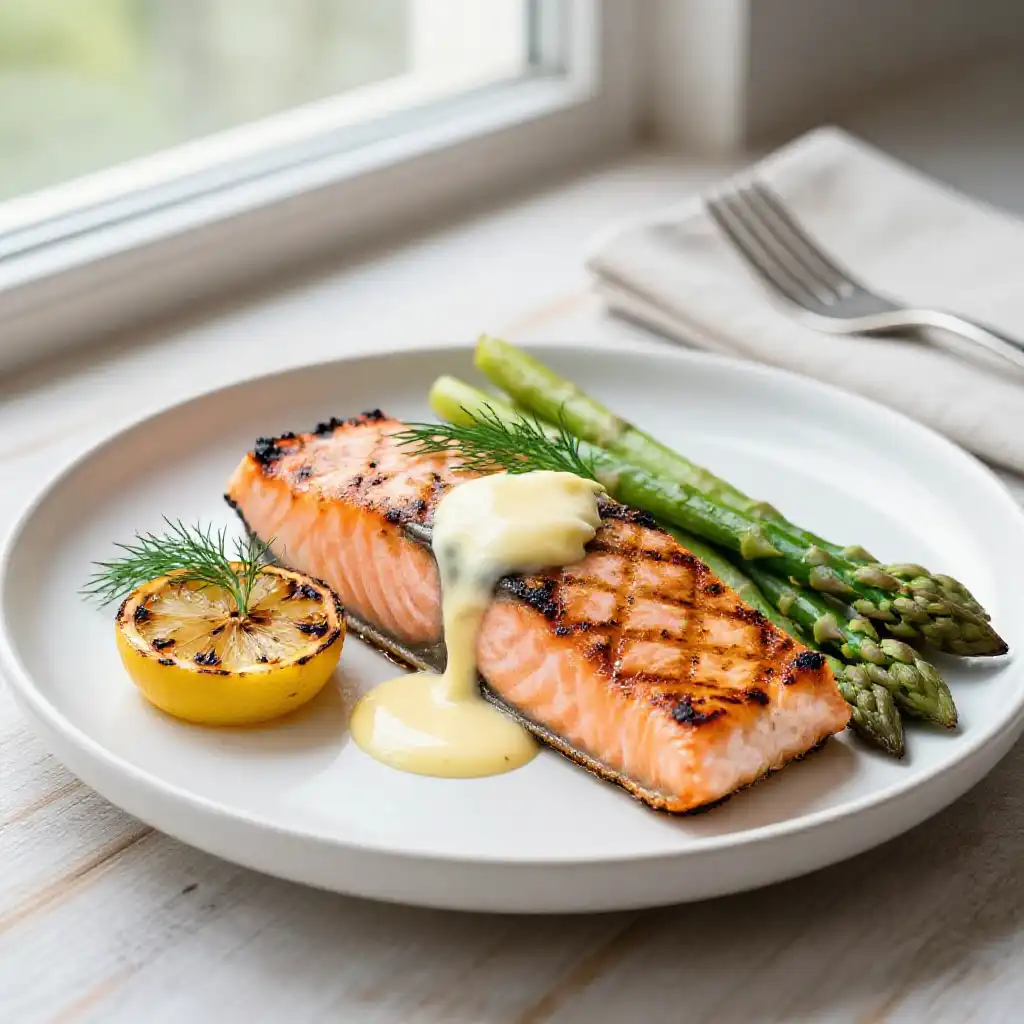
Why the Steak Always Wins the Popularity Contest
Most people reach for the fillet because it’s “safe.” But if you want to eat like royalty, you reach for the steak. Why? Because the bone is still in there, tucked right in the center, acting like a little flavor-conductor that keeps the meat juicy from the inside out.
This recipe isn’t just about food; it’s about the contrast. You get that rugged, smoky exterior—the kind of char that makes your neighbors peek over the fence—paired with a center so tender it practically dissolves on your tongue.
And let’s be real. There is something incredibly sophisticated about a salmon steak. It looks like it belongs in a high-end bistro, but you can pull it off in your flip-flops while sipping a refreshing fruit smoothie. It’s the ultimate “I’m a culinary genius” cheat code.
🍳 Used in this recipe
Get It on Amazon Basics✔ Free Delivery | ✔ Top Rated | ✔ Budget-FriendlyThe Science of the Sear: Why Salmon Loves Heat
Salmon is a fatty fish—and in the world of cooking, fat is our best friend. When you place a salmon steak on a screaming hot grill, a magical chemical reaction called the Maillard reaction takes place. The proteins and sugars on the surface transform into a complex, savory crust.
But here’s the secret: Salmon fat has a low melting point. If you cook it too low and slow, that precious moisture leaks out, leaving you with a dry, chalky brick. We want high heat to lock everything in. We want that skin to get crisp enough to snap.
Want to know the real pro-move? Keep your salmon cold until the very moment it hits the grill. This gives you a better chance of achieving a perfect sear on the outside while keeping the center a luscious medium-rare. For more masterclass tips on protein, check out our other sensational recipes.
🍳 Used in this recipe
Get It on Amazon Basics✔ Free Delivery | ✔ Top Rated | ✔ Budget-FriendlyThe Flavor Makers: What You Need to Raid From the Pantry
To make the best easy Grilled Salmon Steaks with Lemon Dill Butter, you don’t need a 40-item grocery list. You just need high-quality essentials.
- Salmon Steaks: Look for bright pink/orange flesh that’s firm to the touch. Aim for 1-inch thickness.
- Unsalted Butter: This is the canvas for our flavor. Use the good stuff!
- Fresh Dill: Do not even think about using the dried stuff in the back of the cabinet. We need that grassy, anise-like punch.
- Lemon Zest & Juice: The acid cuts through the richness of the fish like a sharp knife.
- Garlic: One clove, finely minced, just to add a little bass note to the melody.
- Smoked Paprika: A tiny pinch on the fish to enhance that “fired-up” flavor.
The Step-by-Step: How to Make Grilled Salmon Steaks with Lemon Dill Butter
Step 1: The Compound Butter Magic
Start by softening your butter. In a small bowl, mash it together with the chopped dill, lemon zest, a squeeze of lemon juice, and that minced garlic. Use a fork to whip it until it’s airy and fragrant. Wrap it in parchment paper, roll it into a log, and toss it in the fridge to firm up.
Step 2: Prepping the Stars
Pat your salmon steaks bone-dry with paper towels. I mean DRY. Moisture is the enemy of a good sear. Rub them down with a little olive oil, then season generously with coarse salt, cracked black pepper, and a dusting of smoked paprika.
🍳 Used in this recipe
Get It on Amazon Basics✔ Free Delivery | ✔ Top Rated | ✔ Budget-FriendlyStep 3: The Heat is On
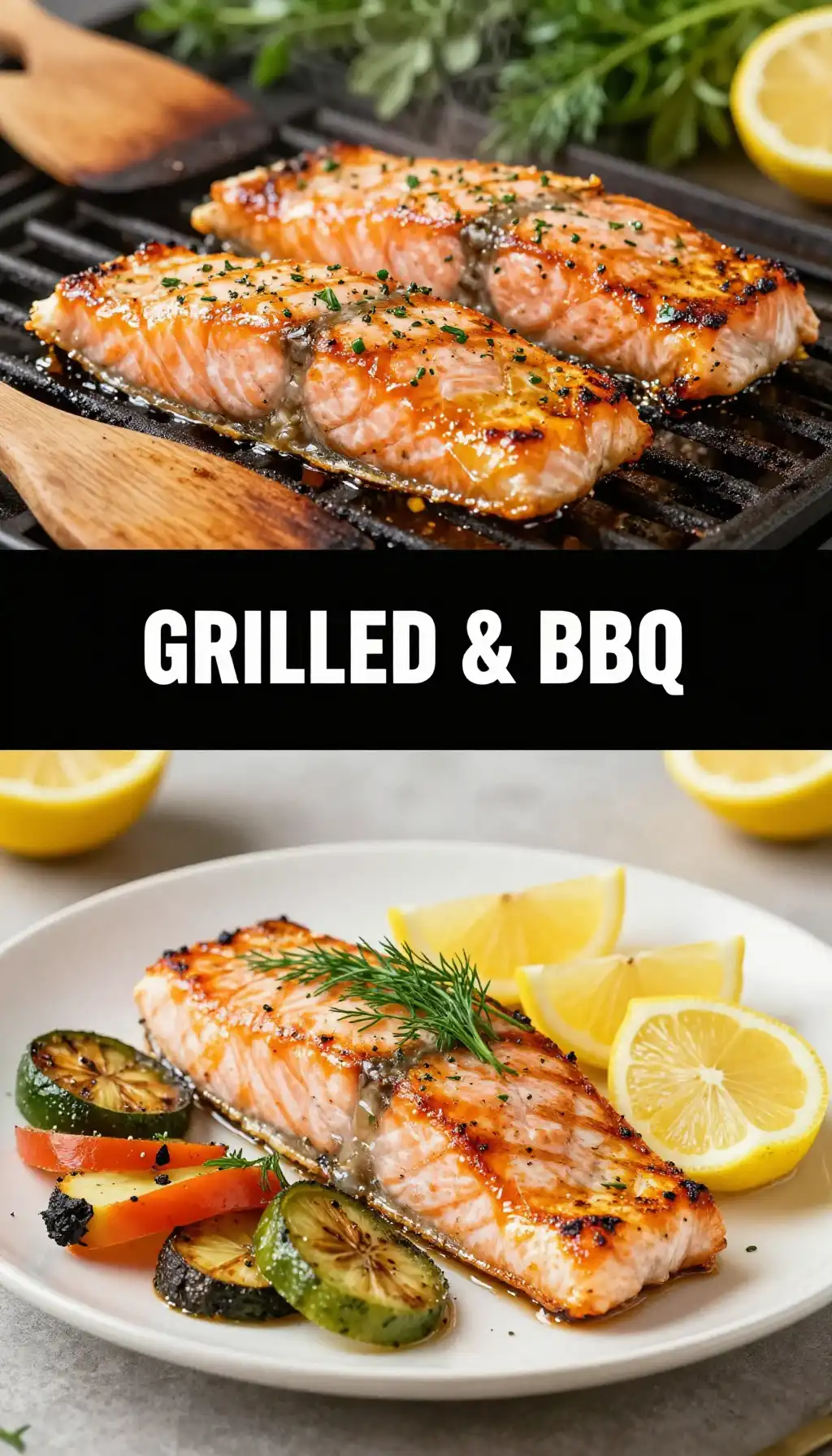
Get your grill to medium-high heat. Clean the grates and oil them well. Lay the steaks down at a 45-degree angle to get those beautiful diamond grill marks. Now—and this is the hard part—don’t touch them. Let them develop a crust for about 4-5 minutes.
Step 4: The Flip and Finish
Flip them gently using a wide spatula. Cook for another 3-4 minutes. You’re looking for an internal temperature of about 135°F (57°C) for a perfect medium. As soon as they come off the grill, crown each steak with a thick disc of that chilled lemon dill butter. Watch it weep over the sides in a golden stream.
Don’t Be That Guy: Common Pitfalls to Avoid
Look, we’ve all been there. You try to flip the fish and half of it stays stuck to the grill. Stop! If the fish is sticking, it’s not ready to be flipped. The grill will naturally “release” the meat once the sear is complete.
🍳 Used in this recipe
Get It on Amazon Basics✔ Free Delivery | ✔ Top Rated | ✔ Budget-FriendlyAnother crime? Overcooking. Salmon continues to cook for a few minutes after you take it off the heat (it’s called carryover cooking). If you wait until it looks totally “done” on the grill, it’s going to be “overdone” on your plate. Pull it off when it still has a hint of translucency in the very center.
Serving Vibes: Setting the Table
This isn’t a “sit on the couch and watch TV” kind of meal. This is a “set the table, light a candle, and put on some jazz” kind of meal. It feels celebratory.
Serve these steaks alongside some grilled asparagus or a pile of fluffy jasmine rice to soak up every drop of that melted dill butter. If you’re feeling extra fancy, a cold cucumber salad provides a crisp, cooling contrast to the smoky heat of the grill.
🍳 Used in this recipe
Get It on Amazon Basics✔ Free Delivery | ✔ Top Rated | ✔ Budget-FriendlyRecommended Product
 -33%
-33%
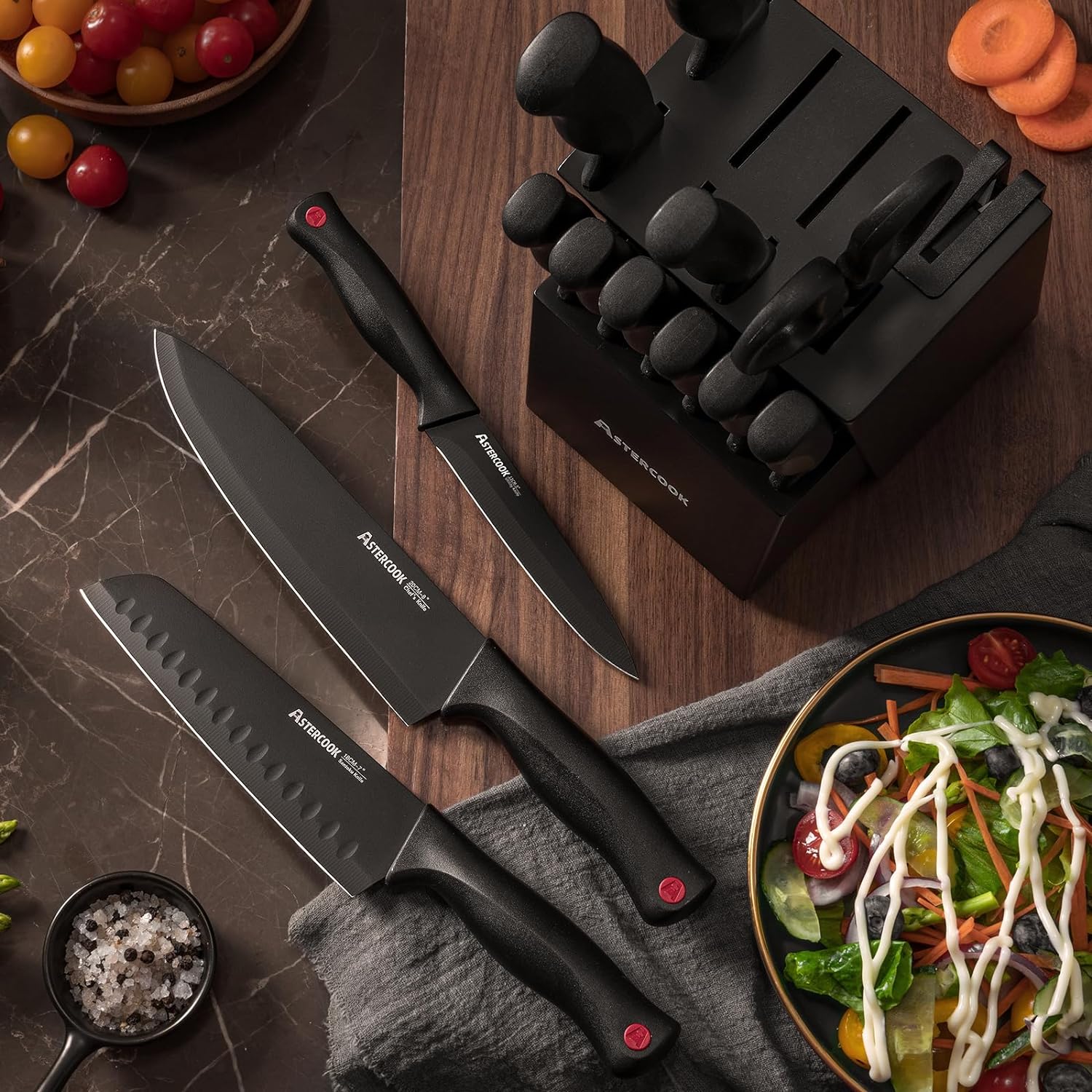
Astercook 15‑Piece Kitchen Knife Set with Built‑In Sharpener Block
- Built‑In Sharpener →: Integrated sharpener in block for easy maintenance
- Material →: High‑carbon German stainless steel blades (rust‑resistant, durable)
- Dishwasher Safe →: Yes (but hand washing recommended to preserve sharpness)
Your Burning Questions Answered (FAQ)
How many calories in Grilled Salmon Steaks with Lemon Dill Butter?
A standard 6-ounce salmon steak with a tablespoon of herb butter typically clocks in at around 450-500 calories. It’s packed with healthy Omega-3 fatty acids and high-quality protein, making it a “nutritional powerhouse” that actually tastes like a cheat meal.
Can I use fillets instead of steaks?
You can! Just keep in mind that fillets are thinner and usually boneless, so they will cook faster—usually 3 minutes per side. You won’t get that same “steak-house” feel, but the lemon dill butter will still make them taste incredible.
How to freeze Grilled Salmon Steaks with Lemon Dill Butter?
If you have leftovers, wrap the cooked steaks tightly in plastic wrap and then aluminum foil. They will stay good in the freezer for up to 2 months. To reheat, thaw overnight in the fridge and warm them gently in a pan with a splash of water or broth to keep them from drying out.
🍳 Used in this recipe
Get It on Amazon Basics✔ Free Delivery | ✔ Top Rated | ✔ Budget-FriendlyRecommended Product
 -11%
-11%
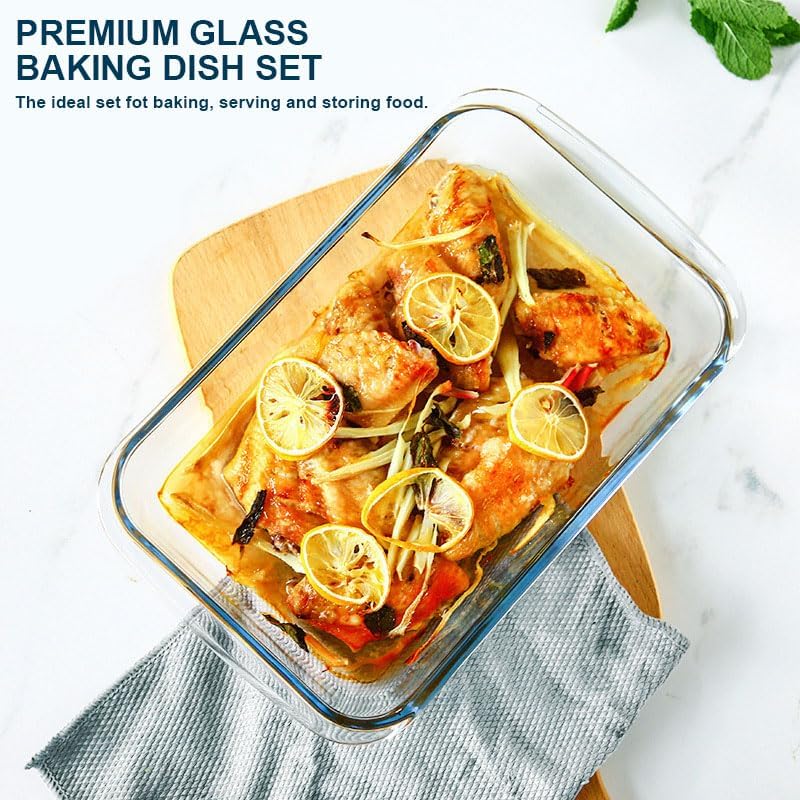
8‑Piece Deep Glass Baking Dish Set with Plastic Lids (Rectangular Bakeware)
- Material: Oven, freezer & microwave safe borosilicate glass (goes from fridge/oven without cracking)
- Pieces →: 4 rectangular dishes + 4 tight‑fitting plastic lids (stackable)
- Easy Care →: Dishwasher safe glass & lids
What if I don’t have a grill?
No grill? No problem. Use a heavy cast-iron skillet on your stovetop. Get it smoking hot and follow the same instructions. You’ll miss the wood-smoke flavor, but you’ll get an even better crust!
So, what are you waiting for? Fire up those coals, grab the dill, and let’s make some magic happen. Your taste buds will thank you, and your dinner guests will never want to leave. (Actually, that might be a problem. Oh well!)
Grilled Salmon Steaks with Lemon Dill Butter

Ingredients
Ingredients
- 4 pieces salmon steaks about 1-inch thick
- 2 tbsp olive oil extra virgin
- 4 tbsp unsalted butter softened to room temperature
- 1 tbsp fresh dill finely chopped
- 1 tsp lemon zest freshly grated
- 1 tbsp lemon juice freshly squeezed
- 1 tsp garlic minced
- 0.5 tsp kosher salt plus more for seasoning
- 0.25 tsp black pepper freshly cracked
Notes
🍳 Used in this recipe
Get It on Amazon Basics✔ Free Delivery | ✔ Top Rated | ✔ Budget-Friendly