
The Kind of Bread That Makes Your Kitchen Smell Like a Istanbul Bazaar
There’s a moment, just before the crust sets, when the air in my kitchen changes. It’s not just the warm, yeasty scent of bread. Oh no. This is something else entirely. It’s a bright, sun-drenched perfume, a whisper of lemon and orange zest that cuts through the richness of the bake. It smells like a tiny vacation. I remember the first time I tried to replicate the flatbreads I’d devoured on a trip years ago—pillowy, slightly chewy, and with this incredible aromatic lift that I just couldn’t place. It was citrus. Not in a “spritz your water” way, but a foundational flavor.
This recipe is my obsession, perfected. It’s the **No-Fail Dutch Oven Fluffy Citrus-Kissed Turkish Low-Carb Bread**, and it’s the answer to your bread prayers. The Dutch oven is the magic trick, trapping steam to create a blistering, golden crust while the inside steams itself into a fluffy, cloud-like wonder. And that citrus? It’s the plot twist you didn’t see coming. It’s the secret handshake. Ready to make your house smell like a dream and your taste buds do a happy dance?
Recommended Product

Why This Bread is Your New Best Friend
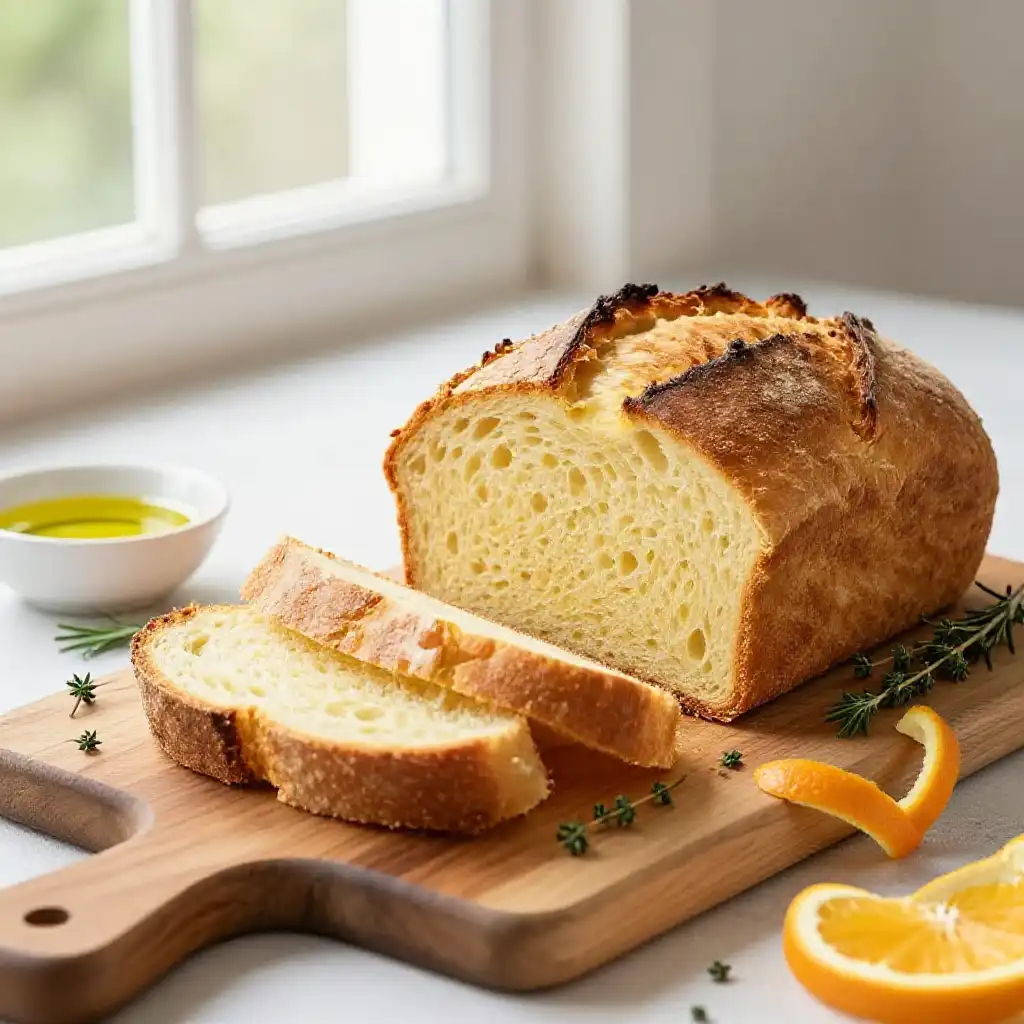
Let’s be real. Most low-carb bread recipes are a tragedy. They’re dense, gritty, or taste vaguely of cardboard and disappointment. This is not that. This is the bread you proudly serve to guests, the bread you tear into with gleeful abandon while it’s still hot. The Dutch oven does the heavy lifting, creating a perfect baking environment that you simply can’t get from a standard loaf pan. It gives you that stunning, crackly, artisan-style crust that shatters when you tap it.
🍳 Used in this recipe
Get It on Amazon Basics✔ Free Delivery | ✔ Top Rated | ✔ Budget-FriendlyAnd the texture? Forget what you know. We’re talking a tender, springy crumb that pulls apart beautifully. It’s sturdy enough for a hearty spread but delicate enough to enjoy on its own. The citrus zest isn’t just a garnish; it’s woven into the very fabric of the dough, infusing every single bite with a subtle, zesty brightness that elevates the entire experience. It’s an easy win, a guaranteed showstopper that feels incredibly special without requiring you to be a master baker.
The Citrus Secret: More Than Just a Pretty Zest
Why are we so obsessed with citrus in a Turkish-style bread? It’s all about the aromatic oils. When you zest a lemon or an orange, you’re not just adding flavor; you’re releasing tiny pockets of essential oil that are far more potent than the juice itself. These oils cut through the richness of the dough and provide a high note that balances the earthy, savory notes of the bake. It’s the difference between a good loaf and an unforgettable one.
In Turkish cuisine, aromatics are king. They understand that food should engage all the senses. The zest provides a beautiful fragrance that hits you the second you open the oven door. It’s a sensory experience that turns a simple loaf of bread into an event. This is the kind of detail that makes people pause mid-chew and say, “What IS that?” in the best way possible.
🍳 Used in this recipe
Get It on Amazon Basics✔ Free Delivery | ✔ Top Rated | ✔ Budget-FriendlyThe Step-by-Step: Let’s Get That Dough Rising
Alright, enough talk. Let’s get our hands a little floury. This process is straightforward, but a little attention to detail will make you a legend.
**First, the Blooming:** In a large bowl, combine your warm water (think bathwater, not scalding) and a sprinkle of sweetener (like a teaspoon of sugar or honey substitute) with your yeast. Let it sit for 5-10 minutes until it gets foamy and fragrant. This is your yeast waking up and telling you it’s ready to party. If it doesn’t foam, your yeast is sleepy—get new yeast.
**The Mix-Up:** Add in your flour, salt, and the star of the show: your citrus zest. I use a microplane to get a fine, fluffy zest from one whole lemon and half an orange. You want those little flavor bombs distributed evenly. Mix until a shaggy, slightly sticky dough forms. Don’t be tempted to add a ton of extra flour here! A slightly sticky dough is the key to a tender crumb.
🍳 Used in this recipe
Get It on Amazon Basics✔ Free Delivery | ✔ Top Rated | ✔ Budget-Friendly**The Rise:** Cover the bowl with a damp tea towel and let it hang out in a warm, draft-free spot for about an hour, or until it’s puffy and roughly doubled in size. This is the magic of fermentation at work.
**The Shape:** Gently tip the dough onto a lightly floured surface. We’re not doing a heavy knead here. Just a gentle fold and tuck, shaping it into a round ball. Place it on a piece of parchment paper, seam-side down.
**The Dutch Oven Dance:** This is the best part. Place your empty Dutch oven (with its lid on) into your cold oven. Preheat everything together to 450°F (230°C). Let the Dutch oven heat up for a solid 30 minutes. It needs to be screaming hot.
🍳 Used in this recipe
Get It on Amazon Basics✔ Free Delivery | ✔ Top Rated | ✔ Budget-Friendly**The Big Moment:** Carefully remove the blazing-hot Dutch oven from your oven. Lift your dough using the parchment paper as a sling and gently lower it into the pot. Quickly slash the top of the dough with a sharp knife or razor blade (this is called scoring, and it lets steam escape so your bread doesn’t explode). Put the lid back on and pop it back in the oven.
**The Bake:** Bake for 30 minutes with the lid ON. This is the steam-baking phase. Then, remove the lid and bake for another 10-15 minutes, until the crust is a deep, glorious golden brown. Your kitchen will smell absolutely insane. Let it cool on a wire rack before you slice it (I know, the wait is torture, but it’s crucial for the texture).

Common Pitfalls: How NOT to Mess Up Your Masterpiece
Baking is a science, but it’s also an art. Here are a few ways people trip up on the way to bread glory.
🍳 Used in this recipe
Get It on Amazon Basics✔ Free Delivery | ✔ Top Rated | ✔ Budget-Friendly**The Flour Fiasco:** Your dough feels too sticky, so you panic and dump in half a cup of extra flour. **Don’t do it.** That sticky dough is holding the key to a moist, airy crumb. Flour your hands and your work surface instead of adding it to the dough itself. Trust the process.
**The Lukewarm Lie:** Your water isn’t warm enough, so your yeast never really wakes up. Your bread will be a sad, flat puck. Get a thermometer if you’re unsure. 105-115°F is the sweet spot.
**The Impatient Slice:** You pull a gorgeous, golden loaf from the oven, and the steam is calling your name. You slice into it immediately. **Disaster!** The inside is still setting. Cutting it too soon releases all the steam and turns your beautiful fluffy crumb into a gummy mess. Let it rest for at least 30 minutes. Go admire your work from a distance.
🍳 Used in this recipe
Get It on Amazon Basics✔ Free Delivery | ✔ Top Rated | ✔ Budget-FriendlyServing Vibes: Setting the Scene
This bread isn’t just food; it’s a centerpiece. Imagine this: it’s a chilly, grey afternoon, and you’ve just pulled this steaming, golden orb of joy from the oven. The whole house is warm and smells of citrus and baked perfection. You tear off a piece, the crust crackling, and the steam escapes in a fragrant cloud.
Recommended Product

Amazon Basics Silicone Baking Mat (2-Pack Non-Stick Oven Liners)
- Material →: Food-safe silicone, reusable thousands of times
- Non-Stick →: No butter, oil, or parchment needed
This is the bread for slathering with good olive oil and a sprinkle of flaky sea salt. It’s the perfect companion to a rich, spiced stew, a vibrant salad loaded with feta and olives, or a platter of grilled kebabs and creamy hummus. It’s the star of a cozy family dinner or the unexpected hero of a potluck. It’s rustic, it’s elegant, and it’s unforgettable. For more culinary inspiration that breaks the mold, you can always find fantastic ideas over on Pinterest.
Your Bread Questions, Answered
Let’s tackle the nitty-gritty. People always ask me about this recipe, and I’m an open book.
🍳 Used in this recipe
Get It on Amazon Basics✔ Free Delivery | ✔ Top Rated | ✔ Budget-FriendlyHow do I get that incredible, crackly crust?
The Dutch oven is your non-negotiable tool here. It traps the moisture released by the dough, creating a steamy environment that keeps the crust soft long enough for the bread to expand (oven spring!). Then, when you remove the lid, that trapped moisture evaporates, and the dry heat gives you that deep, blistered, crunchy crust. It’s science you can eat!
Can I freeze the No-Fail Dutch Oven Fluffy Citrus-Kissed Turkish Low-Carb Bread?
Absolutely! This bread freezes like a dream. Once it’s completely cool, I recommend slicing it first. That way, you can grab just a slice or two whenever you need it. Wrap the slices tightly in plastic wrap, then place them in a freezer-safe bag. To thaw, just leave it on the counter for a bit or pop it directly into a toaster or oven for a few minutes to bring it back to life.
What are the calories in No-Fail Dutch Oven Fluffy Citrus-Kissed Turkish Low-Carb Bread?
This will vary slightly based on your exact ingredients, but a typical slice of this low-carb wonder is significantly lighter in carbs and calories than traditional bread. For a standard loaf sliced into 12 pieces, you’re generally looking at around 90-110 calories per slice with a much lower net carb count, making it a fantastic choice for anyone watching their carb intake. It’s indulgent but won’t derail your goals.
🍳 Used in this recipe
Get It on Amazon Basics✔ Free Delivery | ✔ Top Rated | ✔ Budget-FriendlyMy bread came out dense. What happened?
The two most likely culprits are either your yeast wasn’t active enough, or you added too much flour. Make sure your yeast is fresh and foamy during the bloom. And remember, a shaggy, slightly sticky dough is your friend! A dense loaf can also result from not letting it rise long enough, so give it the time it needs to get nice and puffy.
Recommended Product
 -11%
-11%
8‑Piece Deep Glass Baking Dish Set with Plastic Lids (Rectangular Bakeware)
- Material: Oven, freezer & microwave safe borosilicate glass (goes from fridge/oven without cracking)
- Pieces →: 4 rectangular dishes + 4 tight‑fitting plastic lids (stackable)
- Easy Care →: Dishwasher safe glass & lids
Is it really ‘no-fail’?
Look, I’m confident in this recipe, but baking can be a fickle friend. That said, this method is designed for success. The Dutch oven takes the guesswork out of temperature and steam. As long as your yeast is happy and you resist the urge to add a ton of extra flour, you are 99.9% on your way to an incredible loaf. I’ve laid out the map; you just have to take the scenic drive. Enjoy every bite
No-Fail Dutch Oven Fluffy Citrus-Kissed Turkish Low-Carb Bread

Ingredients
Ingredients
- 2 cup almond flour fine blanched
- 1 cup coconut flour
- 1 tbsp baking powder aluminum-free
- 1 tsp salt
- 1 tsp xanthan gum for structure
- 4 large eggs room temperature
- 1/4 cup olive oil extra virgin
- 1/4 cup water warm
- 1 tbsp fresh lemon zest finely grated
- 1 tbsp fresh orange zest finely grated
- 1 tsp sesame seeds for topping (optional)