
The Cast Iron Sizzle That Made My Kitchen Feel Like a Seoul Street Food Stall
The first time I made this, it wasn’t planned. It was one of those frantic, “what’s-in-the-fridge” evenings that somehow birthed a masterpiece. I had this beautiful, ruby-red slab of beef, a jar of fiery gochujang, and a cast iron skillet still warm from dinner. The moment that chilled beef hit the searing-hot surface, the sound wasn’t just a sizzle—it was a symphony. A sharp, instant *tsss* that filled the air with an intoxicating perfume of toasted sesame, sharp garlic, and something green and alive. The steam rose like a savory ghost, carrying the promise of what was to come. My mouth is watering just typing this. This isn’t just a dish; it’s a five-minute vacation for your senses.
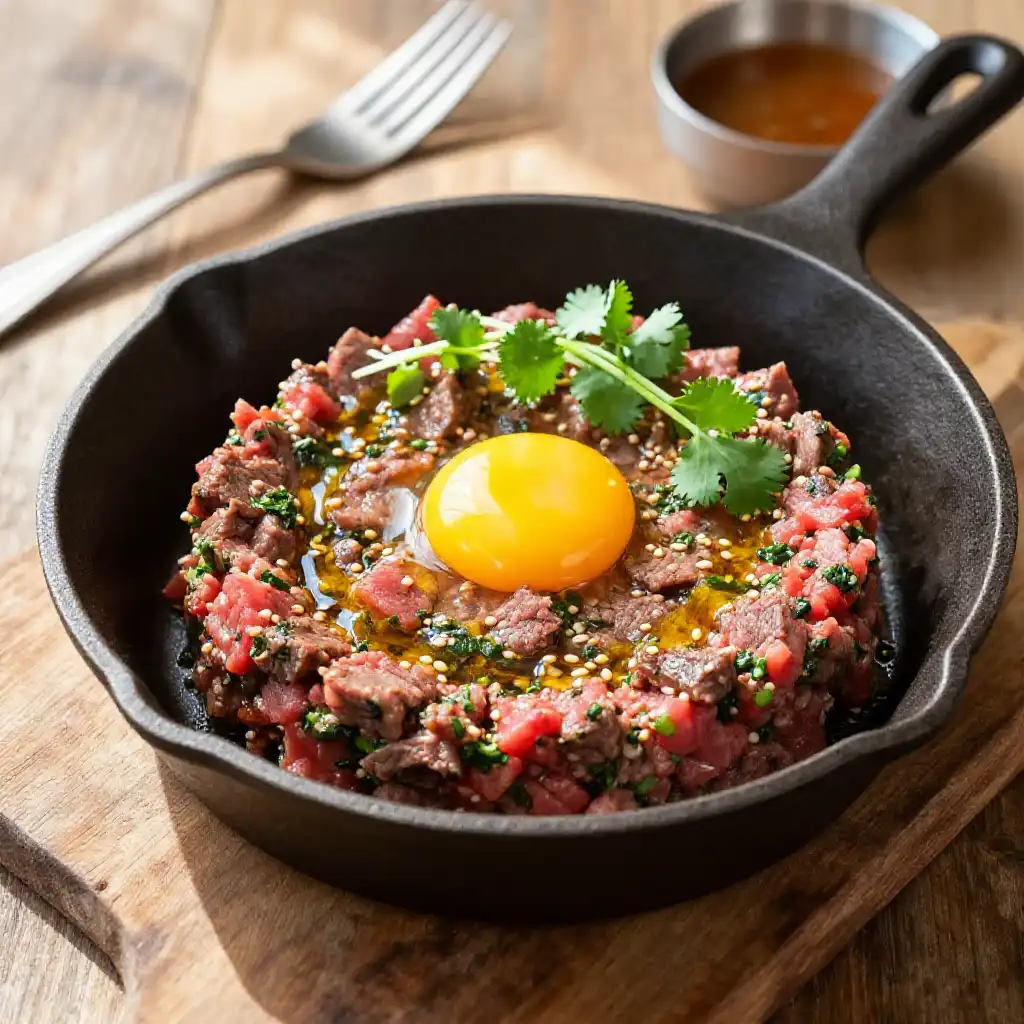
Why This Cast Iron Magic is Your New Party Trick
Let’s be real. Most appetizers are a chore. You’re either frying things until you smell like a fryer or assembling tiny, fussy bites that collapse the moment you look at them. This? This is the anti-fussy appetizer. It’s a no-cook marvel that comes together in the time it takes to slice a cucumber. The cast iron isn’t just for show—it’s your secret weapon for a dramatic entrance. It keeps the dish cool while giving you that sizzling, smoky aroma that makes people wander into your kitchen asking, “What is that incredible smell?” It’s bold, it’s brimming with fresh herbs, and it’s the perfect vehicle for the glorious, chewy texture of premium beef. This recipe is your one-way ticket to being the most interesting person at the potluck. Seriously, this No-Cook Juicy Herbaceous Korean Beef Tartare in Cast Iron is about to become your signature dish.
The Soul of the Dish: A Love Letter to Premium Beef
The science here is beautifully simple, but it demands respect. We’re not cooking the beef, we’re merely waking it up with heat. The magic lies in the Maillard reaction, that glorious browning process that happens in a blink on a screaming-hot surface. It creates hundreds of new flavor compounds, transforming the beef’s simple, clean taste into something deep, nutty, and complex. But here’s the secret: the beef must be impeccably fresh and chilled. Cold meat hits the hot iron and sears instantly on the outside while staying cool and juicy within, creating a textural wonderland. The fat marbling in a good cut of beef renders just enough to coat every grain, melding with the gochujang and aromatics. It’s not about denaturing proteins with prolonged heat; it’s about a fleeting, fiery kiss that leaves the beef tender, succulent, and utterly alive.
The Flavor Makers: What You Need to Raid From the Pantry
This ingredient list is short, sharp, and powerful. No fluff, all flavor.
The Beef: You need about a pound of the good stuff. Look for a tenderloin, sirloin, or ribeye. The key is a fine, even grind from your butcher or a very, very small dice if you’re doing it yourself. Quality is non-negotiable here.
The Gochujang Glaze: This is the heart of the flavor. Gochujang brings the heat, the sweetness, and that deep, fermented umami punch. We’ll mix it with a touch of soy sauce and sesame oil for a glossy, addictive coating.
The Herbaceous Bomb: We’re not skimping on freshness. A pile of thinly sliced scallions, a generous handful of chopped cilantro (or perilla leaves if you can find them!), and a whisper of minced garlic. This is what makes it “herbaceous” and bright.
The Cast Iron Stage: A well-seasoned 10 or 12-inch skillet is your canvas. The goal is to get it hot enough that a drop of water dances and evaporates instantly.
Let’s Get Cooking: The Step-by-Step
Step 1: The Chill Factor. Get your beef as cold as possible. Pop it in the freezer for 15 minutes before you start. This makes slicing or dicing infinitely easier and safer.
Step 2: The Flavor Paste. In a small bowl, whisk together your gochujang, a splash of soy sauce, a drizzle of toasted sesame oil, and a pinch of sugar. This is your power-packed marinade. It should be thick and glossy.
Step 3: The Sizzle & Toss. Place your cast iron skillet over the highest heat possible. Let it get screaming hot for a good 5 minutes. Pat your beef completely dry and toss it with a tiny bit of neutral oil. Carefully lay the beef in the skillet in a single layer. Listen for that glorious sizzle! Let it sear for just 30-45 seconds per side—you want a light brown crust, not cooked-through.
Step 4: The Final Toss. Immediately transfer the hot beef to a bowl. Pour over your gochujang glaze and toss to coat. The residual heat will slightly cook the glaze, making it cling to every nook and cranny. Now, fold in your mountain of fresh herbs and garlic.
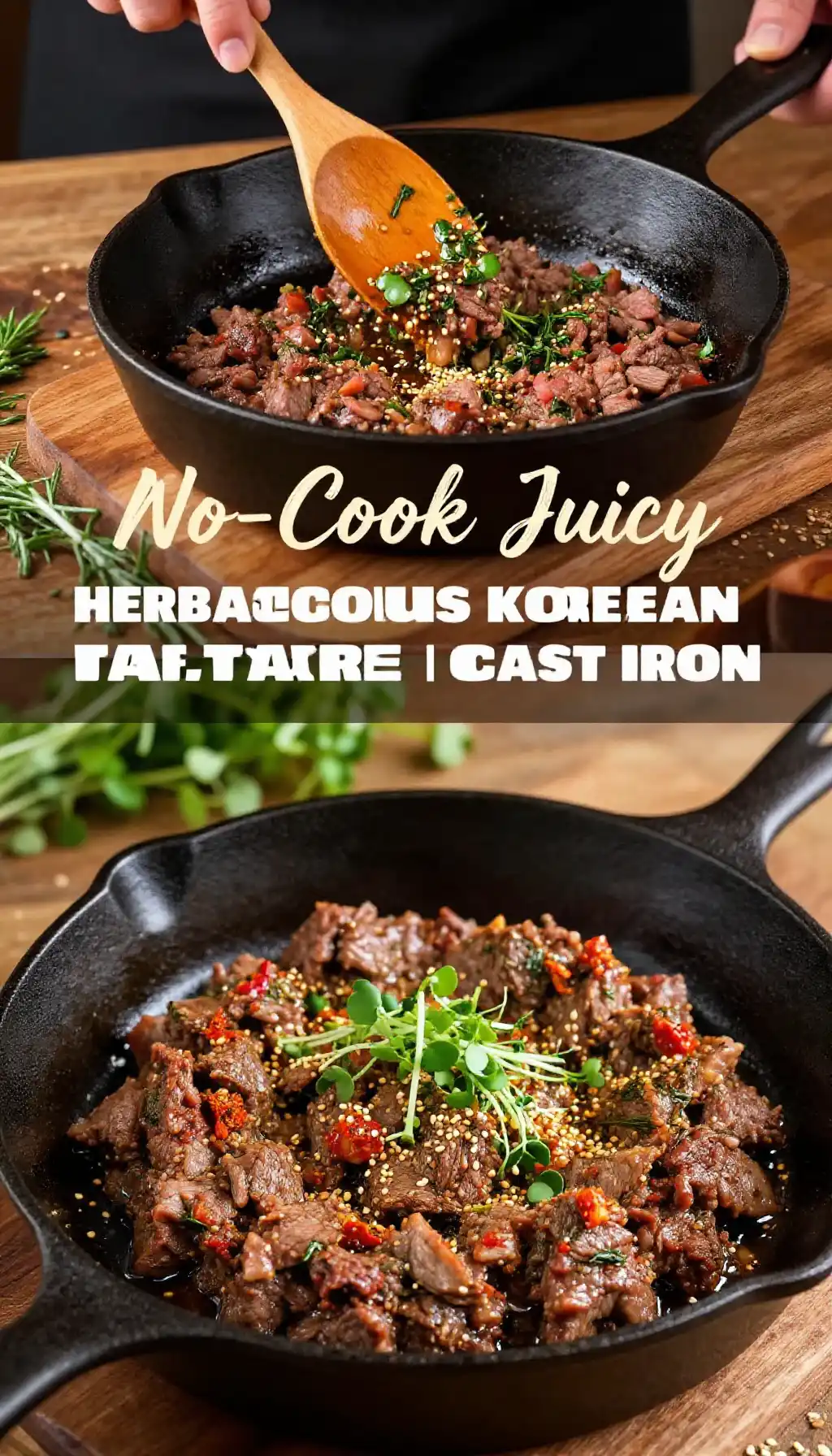
Step 5: The Grand Finale. Wipe out the cast iron quickly (it’s still hot!). Return the glazed, herby beef to the skillet. It will sizzle one more time, releasing an insane aroma. Serve immediately, right from the skillet, with a stack of crisp lettuce leaves or sturdy crackers for scooping.
Common Pitfalls: How NOT to Mess Up Your Masterpiece
The Lukewarm Beef Blunder: If your beef isn’t cold, it will steam in the pan instead of searing. You’ll end up with a grey, sad mess instead of a beautifully crusted bite. The freezer is your friend.
The Soggy Herb Catastrophe: Don’t add the herbs to the hot beef in the pan. The intense heat will wilt them instantly, turning your vibrant green confetti into a sad, brown mush. Always toss them in the bowl after the beef is off the heat.
The Crowd Control Fail: This dish is best served immediately. The cast iron keeps it warm, but the herbs will lose their pop if it sits for too long. Make it as your guests are arriving for maximum impact.
Serving Vibes: Setting the Scene
This is not a quiet, Tuesday-night dinner dish. This is a “turn-the-music-up” and “pour-some-crispy-lemonade” dish. It’s perfect for a lively gathering where people are standing around, chatting, and grabbing bites straight from the skillet. The sizzling cast iron becomes the centerpiece of the table. On a cool evening, the steam rising from the skillet adds a cozy, communal feel. On a hot day, the bold, spicy, and fresh flavors cut through the heat. It’s a conversation starter, a flavor bomb, and the reason your friends will be begging for the recipe. Find more inspiration on Pinterest for how others are plating this beauty.
FAQ: Your Burning Questions, Answered
How to freeze No-Cook Juicy Herbaceous Korean Beef Tartare in Cast Iron?
Here’s the honest truth: freezing is not recommended for this dish. The beauty of this recipe lies in the fresh, raw texture of the beef and the vibrant punch of the herbs. Freezing would compromise both, turning the beef mushy upon thawing and the herbs into a watery, sad version of themselves. This dish is meant to be made fresh, and it’s so quick that you’ll never want to freeze it anyway!
What are the calories in No-Cook Juicy Herbaceous Korean Beef Tartare in Cast Iron?
The calorie count can vary based on the cut of beef and your specific ingredient brands. However, for a general estimate, a serving of this dish (about 1/4 of the recipe) typically falls in the 350-450 calorie range. It’s packed with protein and healthy fats from the beef and sesame oil, making it a satisfying and nutrient-dense appetizer.
Can I use ground beef from the supermarket instead of grinding my own?
You can, but with a major caveat: quality is king. If you use supermarket ground beef, ensure it’s the freshest, highest-fat percentage you can find (at least 80/20). The texture will be different—less of a fine dice and more of a crumble—but the flavor will still be fantastic. For the best experience, ask your butcher to grind a fresh cut for you.
Is it safe to eat raw beef?
This is a crucial question. The safety of eating raw or lightly seared beef depends entirely on the source. You must purchase beef from a reputable butcher or trusted source that guarantees its freshness and suitability for raw consumption. Look for terms like “sashimi-grade” or “for raw consumption.” Never use pre-packaged ground beef from a standard supermarket for this dish, as it has a higher risk of contamination. When in doubt, cook your beef through.
What can I serve alongside this Korean beef tartare?
The options are endless! The classic pairing is crisp, cold lettuce leaves (like romaine or butter lettuce) to wrap the beef in, creating a fresh, crunchy contrast. You can also serve it with toasted sesame seeds, a drizzle of extra sesame oil, or a side of quick-pickled radishes for a tangy crunch. For a more substantial meal, it’s fantastic over a bowl of steamed rice.
No-Cook Juicy Herbaceous Korean Beef Tartare in Cast Iron

Ingredients
Ingredients
- 1 lb ground beef (85% lean) high quality, very cold
- 2 tbsp gochujang (Korean chili paste) mild or medium heat
- 1 tbsp soy sauce or tamari for gluten-free
- 1 tbsp sesame oil toasted
- 1 tsp rice vinegar unseasoned
- 2 tbsp finely chopped green onions white and green parts
- 2 tbsp minced fresh cilantro or parsley as substitute
- 1 tbsp minced garlic freshly minced
- 1 tsp toasted sesame seeds for garnish
- 1 large cast iron skillet chilled in freezer for 10 minutes